Forestry Mulching vs. Traditional Land Clearing: Which Does Your Property Need?
Short answer: for overgrown brush and small trees, forestry mulching is usually cheaper and faster. One 2026 national cost guide puts mulching at $1,800 to $4,000 per acre. The same guide puts dozer and excavator clearing at $2,000 to $6,000 per acre. Hauling the debris off adds another $500 to $2,000 an acre.
Traditional clearing still wins when something is getting built. A foundation, a driveway base or a septic field needs the stumps out and the dirt open. There is also a local wrinkle. In the Willamette Valley, burn piles only work inside a short legal window. That window shuts for the whole summer.
What is the difference between forestry mulching and traditional land clearing?
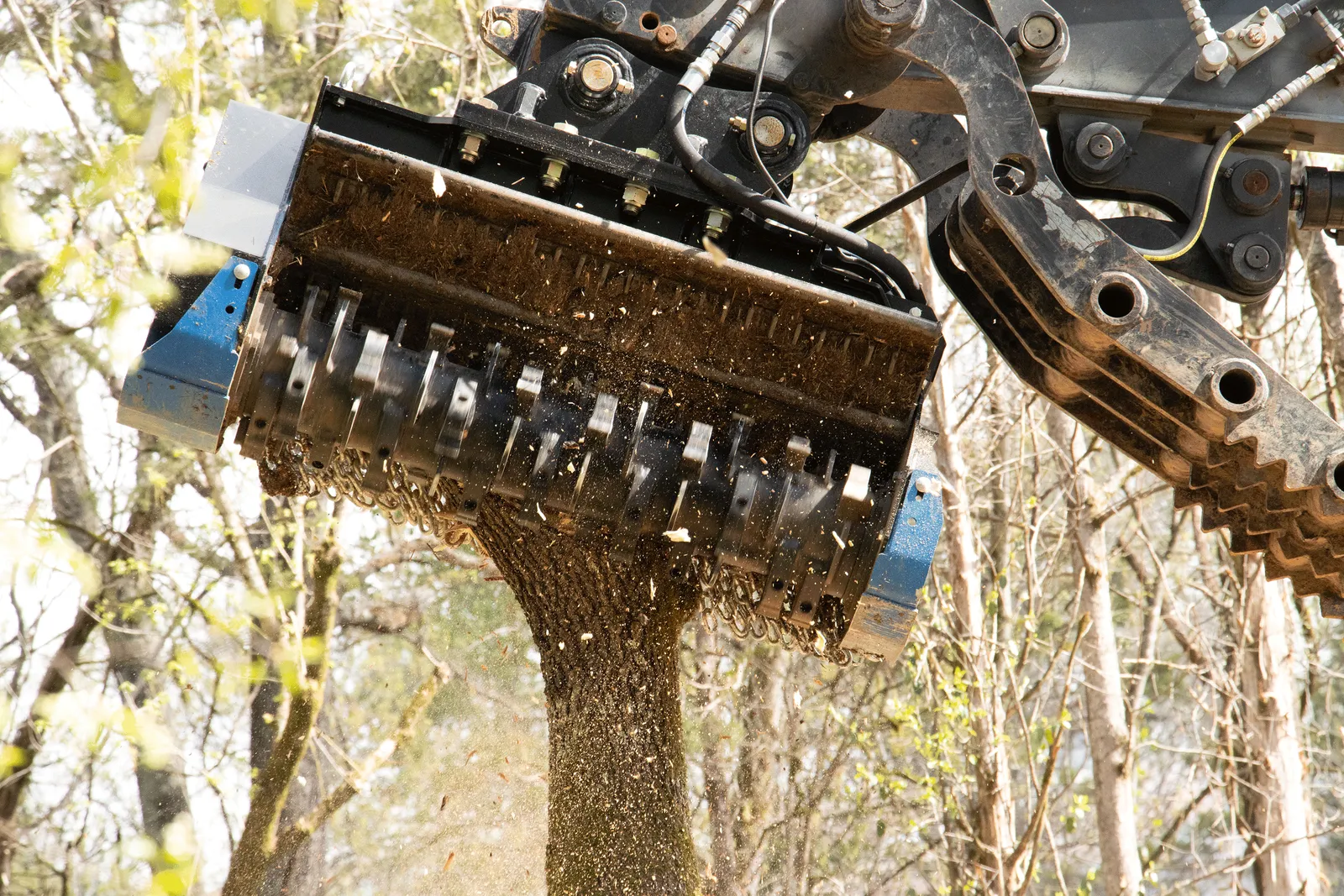
Forestry mulching is a one machine job. A mulching head on a skid steer or an excavator grinds standing brush and small trees into chips. The chips drop where the brush stood and settle into a layer a few inches deep. The property is finished when the last pass is finished.
Traditional land clearing runs in steps. A dozer or a brush rake pushes the growth into piles. An excavator digs out the stumps and root balls. Then the piles get burned on site or loaded and trucked away. The bare ground usually needs rough leveling after.
Both count as land clearing. They just hand the property back in two different conditions. One leaves a chip carpet over soil that was barely touched. The other leaves open dirt and an empty spot where the pile sat.
What does forestry mulching cost compared to land clearing?
Published ranges move around a lot, so treat any single number as a starting point. Here is what one 2026 national cost guide lists by method.
| Method | Typical published range | What the ground looks like after |
|---|---|---|
| Forestry mulching | $1,800 to $4,000 per acre | Chip layer over undisturbed soil |
| Dozer push and pile | $2,000 to $5,000 per acre | Bare dirt with piles waiting to burn |
| Excavator clearing and raking | $2,500 to $6,000 per acre | Open dirt, stumps out, needs leveling |
| Hauling debris off site | $500 to $2,000 per acre on top | Piles gone, trucking added to the bill |
| Stump removal, dug out | $250 to $800 per stump | Holes to backfill on the footprint |
Those are market numbers from national cost guides, not our price list. Another guide quotes mulching by the hour instead, at $150 to $250. The same guides put West Coast work 20 to 40 percent above the national average. Oregon quotes tend to sit high in the range.
Two things move your number more than the method does. An Oregon State University Extension bulletin on mechanical fuel reduction makes the first point. Getting the machine to the site costs money before a single stem is cut. On a one acre parcel, that move in cost lands on one acre.
The second is stem size. Industry guides put a mulching head at full speed on material up to about 8 inches. Past that the passes multiply and the hours climb. That is where mulching starts to lose its price edge.
Which method is easier on the ground?
The same Extension bulletin lists real soil benefits from leaving the ground material in place. It keeps organic matter on site and cuts soil erosion. Shading the surface also holds moisture in the soil. On a valley slope in November, that chip layer is doing work.
Piling and burning does the opposite. It strips the surface down to mineral soil. The bulletin notes that exposed soil often brings more weed pressure. Topsoil can also ride into the pile with everything else.
Compaction is the fair knock on both methods. Tracked machines are heavy, though wide tracks spread the load. Extension guidance is to work when soils are dry and make a single pass. We schedule mulching that way when the calendar allows.
The chip layer does have a limit. You cannot pour a slab or lay road base over chips and buried root balls. When a homesite is the target, mulching opens the acreage and an excavator still digs the footprint.
Can you still burn brush piles in the Willamette Valley?
This is where the two methods really split. Backyard burning across most of the valley is typically open March 1 to June 15. A second window runs October 1 to December 15. Central Lane County sits under its own air agency and typically allows the fall window only.
Your local fire district is the authority, and an open season is not the same as an open day. Districts and the county burn line shut burning down for wind or dry conditions. You check the day you plan to light.
Fire season then closes the door completely. The Oregon Department of Forestry declared fire season for its South Cascade District on June 8 in 2026. Under high regulated use this summer, saw and mowing work ran only before 10 a.m. and after 8 p.m.
So a pile built in July can sit until the fall window opens. Mulched material stays on the ground as chips, so the job finishes on its own schedule. None of this is legal advice. We check the current rules and plan the work around them.
One more planning item. Oregon typically requires a call to 811 two business days before ground disturbing work. Stump dig outs disturb ground, so locates get planned into a clearing job.
Which one does your property need?
Pick mulching when the goal is open, usable ground. That covers overgrown acreage, field edges, fence lines and fuel cut back around a house. It also fits when you want the work done in one pass, without waiting on a burn window.
Pick traditional clearing when something is getting built on the spot, or when the material has to leave the property. Big stems and full stump removal both point the same direction.
Plenty of properties want some of each. Our Bobcat skid steer and our excavator both carry mulching heads. Both also take a brush rake, so a job can shift between them. Heavy thickets along the edges often come out first with brush and undergrowth clearing so the mulcher can work clean.
Getting a plan for your ground
Willamette Valley Land Clearing is based in Lebanon and covers the mid-Willamette Valley: Linn, Benton, Marion, Polk and Lane counties. Estimates are free. Call or text (541) 936-4687 with the acreage, the growth and what you want the ground to do afterward.
If the property is mostly brush and small trees, read up on what a mulching job leaves behind. Work near a creek or on wet ground gets scoped with you first.